GEO vs SEO: Preparing Your Law Firm for AI-Powered Search
Quick summary from Casey — under 30 seconds
The legal marketing industry is shifting beneath our feet. While traditional SEO remains important, a new discipline is emerging: Generative Engine Optimization (GEO). Understanding how AI is changing legal marketing is critical as we transition to this new paradigm. As someone who’s been studying AI’s impact on legal marketing since the early days of ChatGPT, I want to share what law firms need to know about this shift.
What Is GEO?
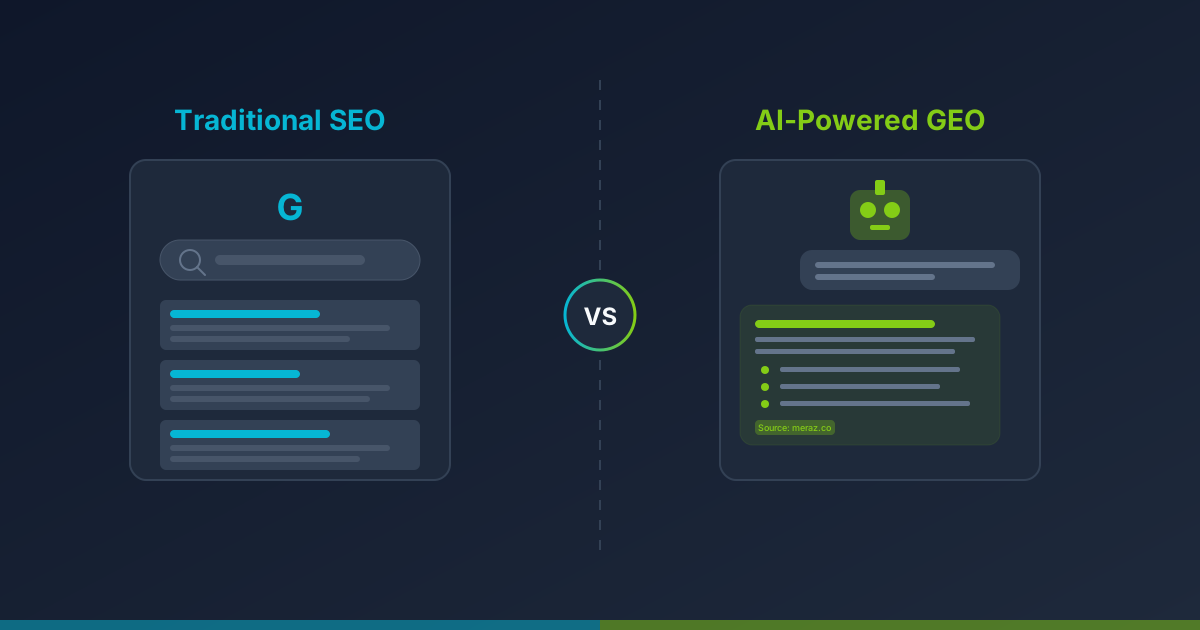
Generative Engine Optimization (GEO) is the practice of optimizing your digital presence to be cited, recommended, and featured in AI-generated responses. While SEO focuses on ranking in Google’s blue links, GEO focuses on being the answer that AI assistants provide.
The Key Difference
Traditional SEO Goal: Rank highly in search results so users click through to your website. A law firm SEO specialist focuses primarily on this.
GEO Goal: Be the authoritative source that AI systems cite and recommend, whether or not users visit your website. This is AI search optimization in action.
This shift has profound implications for law firms.
Why GEO Matters for Law Firms
Changing Search Behavior
People are increasingly turning to AI for initial research:
- “What should I do after a car accident?”
- “Do I need a personal injury lawyer?”
- “How does divorce mediation work?”
- “What are my rights if I’m wrongfully terminated?”
When AI answers these questions, it cites sources and makes recommendations. If your firm’s content informs those answers, you gain visibility to potential clients before they ever perform a traditional search.
The “Zero-Click” Reality
We’re already seeing this in Google. AI Overviews optimization is becoming critical as Google now answers many queries directly in search results. Users get their answer without clicking through to any website. This trend will accelerate as AI becomes more capable and trusted.
For law firms, this means:
- Less traffic from informational queries
- Greater importance of being cited as an authority
- Need to capture attention in AI responses, not just SERPs
Early Mover Advantage
GEO is still in its infancy. Most law firms aren’t thinking about it yet. Firms that establish themselves as authoritative sources now will have significant advantages as AI-powered search becomes the norm.
Traditional SEO vs GEO: A Comparison
| Factor | SEO | GEO |
|---|---|---|
| Primary Goal | Rank in search results | Be cited by AI systems |
| User Interaction | Click through to website | Get answer directly from AI |
| Content Focus | Keyword optimization | Comprehensive authority |
| Success Metric | Rankings, clicks, traffic | Citations, mentions, recommendations |
| Time Horizon | Months to see results | Building now for future relevance |
How AI Systems Source Information
Understanding how AI models gather and synthesize information helps inform GEO strategy:
Training Data
Large language models are trained on vast internet corpora. Content that existed when models were trained may influence their “knowledge,” though they don’t cite specific sources for this baked-in information.
Retrieval-Augmented Generation (RAG)
More relevant for GEO, many AI systems now retrieve current information from the web to inform responses. This means:
- Current, authoritative content can influence AI answers
- Structured, factual content is more likely to be retrieved
- Recognized authority signals matter
Citation Behavior
When AI systems cite sources, they tend to favor:
- Established authoritative domains
- Clear, factual information
- Well-structured content
- Primary sources and research
GEO Strategies for Law Firms
1. Establish Clear Authority Signals
AI systems assess authority through:
Domain Authority and Reputation
- Links from respected legal publications
- Media mentions and expert quotes
- Association with recognized legal organizations
Author Credibility
- Clear attorney bio pages with credentials
- Bar memberships and certifications
- Published articles and speaking engagements
- Years of experience documented
Firm Credentials
- Awards and recognitions (verified)
- Case results and verdicts
- Client testimonials
- Industry involvement
2. Create Comprehensive, Factual Content
AI systems prefer content that:
Provides Complete Answers Don’t write thin content to target keywords. Create comprehensive resources that fully answer questions. A 3,000-word guide to car accident claims that covers everything is more valuable than ten 300-word posts. A strategic content strategy for competitive markets ensures you build this depth systematically.
States Facts Clearly Lead with clear, factual statements that AI can excerpt:
- “In Texas, the statute of limitations for personal injury claims is two years.”
- “Comparative negligence in Colorado means you can recover damages even if you’re partially at fault.”
Cites Authoritative Sources Link to statutes, court decisions, bar associations, and government sources. This signals reliability.
Updates Regularly Current information is prioritized over outdated content. Review and update your core content regularly.
3. Structure Content for AI Consumption
Make your content easy for AI to parse:
Clear Headings and Organization Use descriptive H2 and H3 headings that state what each section covers.
FAQ Format Question-and-answer formats map directly to how users query AI systems.
Lists and Tables Structured information is easier for AI to extract and present.
Schema Markup Implement legal-specific schema to help AI understand your content’s context and authority.
4. Become a Cited Source
Proactive strategies to earn AI citations:
Original Research Conduct and publish original research-case outcome analysis, settlement statistics, survey results. Original data gets cited.
Expert Commentary Provide quotes and commentary to journalists covering legal topics. These quotes get indexed and cited.
Define Terms Create definitive definitions and explanations of legal concepts. Being the source for definitions earns citations.
Answer Publicly Answer legal questions on platforms like Avvo, Quora, and legal forums. These responses may be cited.
5. Monitor AI Mentions
Start tracking how AI systems mention your firm:
- Ask ChatGPT for legal queries, Perplexity, and other AI tools about your practice areas and see what they say
- Note which competitors are being cited
- Track what sources AI systems recommend
Balancing SEO and GEO
GEO doesn’t replace SEO-it supplements it. Here’s how to balance both:
SEO Still Matters Because:
- Billions of searches still happen on Google
- Many users prefer to read content directly
- Local searches are highly transactional (understanding local SEO ranking factors remains critical)
- Paid search remains effective
GEO Matters Because:
- AI usage is growing exponentially
- Younger users prefer AI assistants
- AI answers influence user behavior
- Early movers build lasting advantages
Integrated Approach
The good news: much of what makes content effective for GEO also helps SEO. Comprehensive, authoritative, well-structured content performs well in both paradigms.
Create Once, Optimize Twice When creating content, think about both:
- How will this rank in traditional search?
- How will this be used/cited by AI systems?
What to Do Now
Immediate Actions
- Audit your authority signals: Are your credentials clearly documented?
- Review content depth: Is your core content comprehensive enough to be cited?
- Check AI mentions: What do AI tools say about your practice areas and your firm?
- Structure content for AI: Add clear headings, FAQs, and factual statements.
Medium-Term Strategy
- Create original research: Generate data and insights that can be cited.
- Build media relationships: Position attorneys as expert sources.
- Expand content depth: Build comprehensive topic hubs.
- Implement schema: Ensure all relevant structured data is in place.
Long-Term Vision
- Establish thought leadership: Be the recognized authority in your niche.
- Monitor AI evolution: Stay current on how AI systems are changing. Our AI-Powered SEO course covers strategies for adapting to this shift.
- Adapt continuously: GEO best practices will evolve rapidly.
The Bottom Line
The shift from SEO to GEO is real, and it’s happening now. Law firms that ignore this transition risk becoming invisible as more searches bypass traditional results entirely.
But this isn’t cause for panic-it’s an opportunity. Firms that establish authority now, that create comprehensive and trustworthy content, that position themselves as the experts AI systems should cite, will have enormous advantages as this transition accelerates. Juris Digital is actively helping law firms prepare for this AI-driven future.
The fundamentals remain: provide genuine expertise, create valuable content, build real authority. What’s changing is how that authority is discovered and validated.
I’ve been studying and preparing for this shift since ChatGPT’s launch. If you want to discuss how your firm can adapt to AI-powered legal marketing, let’s connect.
Topics
Related Articles
How AI is Changing Legal Marketing (And What to Do About It)
The rise of AI search is changing how potential clients find lawyers. Learn about Generative Engine Optimization (GEO) and how to prepare your law firm.
Read MoreThe 'Don't Pay Until You Rank' Trap: Why Performance SEO Fails Law Firms That Want to Win
Pay-for-performance SEO sounds risk-free. But when Google changes its algorithm, these agencies have no income to fix your rankings. Here's what actually happens.
Read MoreWhy Law Firms Need a Specialized SEO Expert in 2026
Discover why generic SEO agencies fail law firms and how a specialized law firm SEO expert can deliver significant results for your practice.
Read MoreNeed Help With Your Law Firm's Marketing?
With 15+ years of experience helping law firms grow through SEO and digital marketing, I can help you develop a strategy that delivers results.
Let's Discuss Your Goals
Casey Meraz is the leading law firm SEO expert with 15+ years of experience helping attorneys dominate search results. As CEO of Juris Digital, he has helped hundreds of law firms grow through ethical, data-driven digital marketing strategies.