E-E-A-T for Law Firms: How to Build Trust Signals Google Rewards
Quick summary from Casey — under 30 seconds
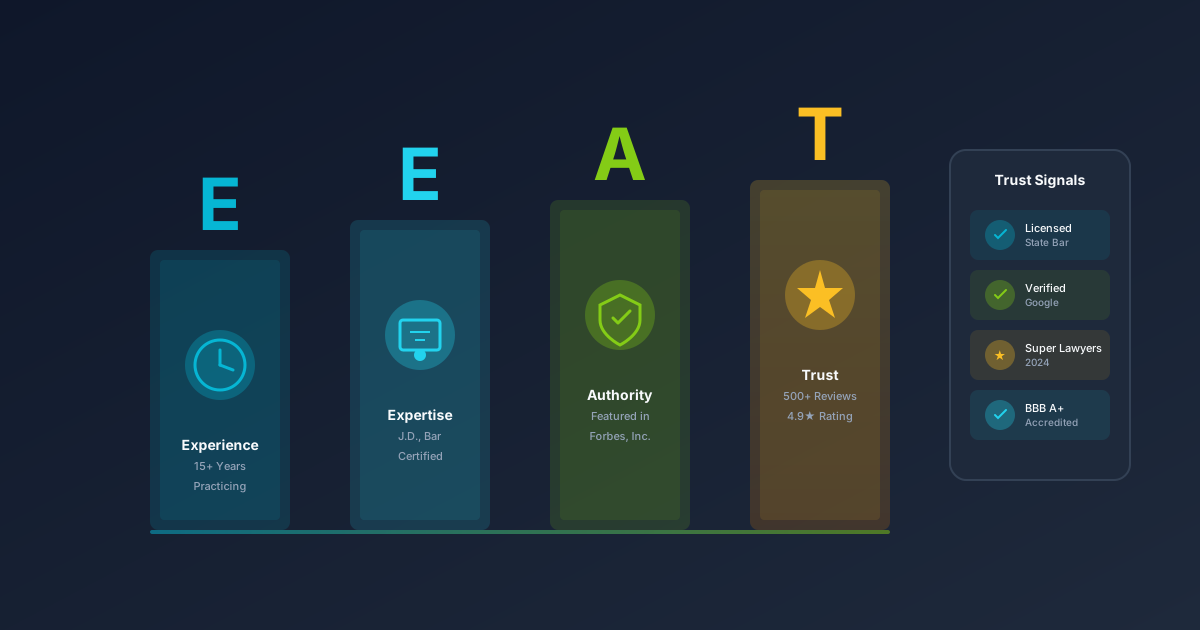
Google’s E-E-A-T framework (Experience, Expertise, Authoritativeness, and Trustworthiness) is particularly important for legal websites. Legal content falls under what Google quality guidelines call “Your Money or Your Life” (YMYL content), where low-quality information can cause real harm. Here’s how law firms can excel at E-E-A-T and build strong trust signals.
What Is E-E-A-T and Why Does It Matter for Law Firms?
Google’s Search Quality Rater Guidelines use E-E-A-T as a framework for evaluating the quality of web content. E-E-A-T is not a ranking algorithm itself, but it guides the human quality raters who evaluate search results and inform algorithm improvements. The signals that demonstrate E-E-A-T correlate strongly with what actually ranks, especially after the 2023 Helpful Content Update reinforced Google’s commitment to rewarding people-first content. For legal websites classified as YMYL, strong E-E-A-T signals are not optional. You can monitor how these signals affect your visibility using Google Search Console, and tools like Ahrefs or Semrush help track your domain authority and backlink profile over time. Let’s break down each component for legal websites and explore how E-E-A-T for lawyers works in practice.
Experience
The first “E” was added in 2022 and stands for Experience. Google wants to see evidence of first-hand, real-world experience with topics.
For law firms, this means showing:
- Actual cases you’ve handled
- Real client scenarios (appropriately anonymized)
- Courtroom experience
- Years in practice
- Specific outcomes achieved
Law firms that excel at demonstrating experience go beyond listing credentials. They create detailed case study pages that walk potential clients through the process of a real engagement, from intake through resolution. Video testimonials from past clients add a personal dimension that text alone cannot match, and behind-the-scenes content showing courtroom preparation or deposition strategy gives prospects a window into what working with your firm actually looks like. Documenting years of practice in specific areas, such as “15 years focused exclusively on trucking accident litigation,” carries more weight than a generic “experienced attorney” claim. Consider creating timeline-based content that shows the evolution of your practice, notable milestones, and how your approach has been shaped by the cases you have handled. Experience-driven content is difficult for competitors to replicate because it is rooted in things only your firm has actually done.
Expertise
Expertise is about having the knowledge and skill in a particular field. For lawyers, this is perhaps the easiest element-you have professional credentials that demonstrate expertise.
Demonstrating expertise:
- Education and bar admissions
- Certifications and specializations
- CLE courses and continuing education
- Published works and presentations
- Awards and recognitions
Beyond the basics, law firms should highlight board certifications in specialty areas, which signal a level of expertise that general practitioners cannot claim. Published legal scholarship in law reviews, bar journals, or legal treatises demonstrates thought leadership that Google’s systems can recognize and reward. Teaching positions at law schools or CLE instructor roles reinforce that peers trust your knowledge enough to put you in front of other attorneys. Avvo ratings and peer endorsements on legal directories serve as third-party validation of expertise. Your practice area pages should go deep enough that a fellow attorney would find the content useful, covering nuances like jurisdiction-specific statutes, recent appellate decisions, and procedural considerations. Detailed, technically accurate content is the strongest expertise signal you can send.
Authoritativeness (Author Authority)
Authority is about being recognized as a go-to source in your field. It’s not just what you say about yourself-it’s what others say about you. Building author authority is essential.
Building authority:
- Media mentions and expert quotes
- Links from respected legal publications
- Peer recognition and referrals
- Speaking at industry events
- Published contributions to legal discourse
Being quoted as a source in legal publications like Law360, The National Law Journal, or local legal news outlets is one of the strongest authority signals available. Earning backlinks from court websites, bar association directories, and government legal resource pages sends a clear signal to Google that institutional sources trust your firm. Wikipedia citations, while difficult to earn, carry significant weight in establishing entity authority. Building a Google Knowledge Panel for your firm and its named attorneys reinforces your presence in Google’s knowledge graph. Creating comprehensive content hubs around your core practice areas, where dozens of interlinked pages cover every facet of a legal topic, builds the kind of topical authority that is difficult for competitors to match quickly.
Trustworthiness
Trust is the foundation of E-E-A-T. For lawyers, who hold positions of professional trust, this is critical.
Building trust:
- Clear about who you are
- Transparent about your services and fees
- Secure website (HTTPS)
- Clear contact information
- Honest about what you can and cannot do
SSL certificates (HTTPS) are table stakes, but trust signals go well beyond a padlock icon. Clear, accessible privacy policies that explain how client data is handled demonstrate respect for visitors. Transparent fee structures, whether you work on contingency, flat fee, or hourly billing, reduce friction and build confidence before a prospect ever picks up the phone. If your firm offers a client portal, make sure it uses strong encryption and communicate those security measures on your site. Displaying your bar good standing verification with links to your state bar profile lets potential clients confirm your credentials independently. Disclosing malpractice insurance coverage, while not required everywhere, signals that your firm stands behind its work. These trust elements matter to both human visitors and the quality raters who evaluate YMYL legal content.
E-E-A-T for Attorney Bio Pages
Your attorney bios are critical E-E-A-T signals. Here’s what to include:
Essential Bio Elements
Professional Credentials:
- Law school and graduation year
- Bar admissions (with dates)
- Court admissions
- Certifications and specializations
Experience Indicators:
- Years of practice
- Practice area focus
- Number of cases handled (if impressive)
- Trial experience
Authority Signals:
- Leadership positions
- Published articles and books
- Speaking engagements
- Awards and recognitions
- Professional associations
- Video introductions (see our law firm video marketing guide for creating attorney introduction videos)
Trust Elements:
- Professional photo (not stock)
- Direct contact information
- Personal approach or philosophy
- Community involvement
Schema Markup for Attorneys
Implement Attorney schema to help Google understand your credentials:
{
  "@type": "Attorney",
  "name": "John Smith",
  "jobTitle": "Personal Injury Lawyer",
  "url": "https://example.com/attorneys/john-smith/",
  "image": "https://example.com/images/john-smith.jpg",
  "alumniOf": "Harvard Law School",
  "memberOf": "State Bar of Texas",
  "award": ["Super Lawyers 2024", "Best Lawyers 2023"]
}
E-E-A-T for Practice Area Content
Your practice area pages need to demonstrate E-E-A-T throughout.
Structure for E-E-A-T
Opening: Establish credentials immediately “With over 20 years handling complex medical malpractice cases and over $100 million recovered for injured patients, our team has the experience to take on hospitals, insurance companies, and medical device manufacturers.”
Body: Demonstrate expertise through depth
- Comprehensive coverage of the practice area
- Specific types of cases you handle
- Your process and approach
- Common questions answered thoroughly
Proof: Show experience and results
- Relevant case results (with appropriate disclaimers)
- Testimonials from past clients
- Media coverage of significant cases
Trust: Be helpful and transparent
- Clear explanation of what to expect
- Information about consultations
- Realistic expectations set
Supporting Content
Create supporting content that reinforces expertise through a strategic content strategy for competitive markets:
- Blog posts diving deeper into specific issues
- FAQs addressing common client questions
- Guides and resources for potential clients
- Analysis of relevant laws and regulations
E-E-A-T for Blog Content
Blog posts need E-E-A-T signals just as much as practice area pages.
Author Attribution
Every blog post should clearly identify its author-a named attorney with credentials. Anonymous content or content attributed to “Admin” lacks E-E-A-T.
Include:
- Author name and title
- Photo
- Brief credentials
- Link to full bio
Content Depth
Shallow content lacks expertise signals. Each blog post should:
- Thoroughly cover its topic
- Demonstrate deep knowledge
- Cite sources where appropriate
- Provide genuine value
Accuracy and Currency
Legal accuracy is essential:
- Verify legal statements against current law
- Include jurisdiction where applicable
- Note when laws may vary by state
- Update outdated content
Currency matters:
- Add publication dates
- Update posts when laws change
- Add “last reviewed” dates for evergreen content
E-E-A-T for Case Results
Case results are powerful E-E-A-T signals when presented properly.
What to Include
- Type of case
- Challenge or obstacle overcome
- Result achieved
- Why it mattered to the client
Compliance Considerations
Most states require disclaimers on case results:
- Past results don’t guarantee future outcomes
- Each case is different
- Specific facts affect results
Check your state bar rules for specific requirements.
Schema for Case Results
Consider implementing schema for notable results:
{
  "@type": "Product",
  "name": "Truck Accident Verdict",
  "description": "$2.5 Million verdict for client injured in semi-truck collision",
  "review": {
    "@type": "Review",
    "reviewBody": "Our legal team secured a $2.5 million verdict...",
    "author": { "@type": "Organization", "name": "Smith Law Firm" }
  }
}
E-E-A-T for Reviews and Testimonials
Client reviews demonstrate experience and build trust.
Collecting Reviews
- Ask satisfied clients for reviews
- Make it easy with direct links
- Follow up appropriately
- Thank reviewers
Displaying Reviews
- Feature reviews prominently on your site
- Implement Review schema markup
- Link to third-party review platforms
- Respond to all reviews professionally
Trust Signals from Reviews
Reviews build trust when they:
- Come from verified sources (Google, Avvo)
- Include specific details about experience
- Are responded to professionally
- Show a pattern of satisfaction
Reviews are also critical local SEO ranking factors that directly impact map pack visibility.
Building External Authority Signals
E-E-A-T isn’t just about your website-it’s about how the web perceives your authority.
Earn Quality Links
Links from authoritative sources signal trust:
- Legal publications (Law360, Above the Law)
- News media coverage
- Bar association profiles
- University citations
- Government resource links
Get Mentioned
Even unlinked mentions build authority:
- Expert quotes in news articles
- Citations in legal resources
- Mentions in professional publications
Contribute to Discourse
Active participation builds authority:
- Publish articles in legal journals
- Speak at conferences
- Contribute to bar publications
- Participate in legal education
Common E-E-A-T Mistakes
Using Stock Photos for Attorneys
Nothing screams “untrustworthy” like a stock photo attorney bio. Use real, professional photos.
Anonymous Content
Content without clear authorship lacks E-E-A-T. Attribute everything to real attorneys.
Exaggerated Claims
Claims you can’t substantiate hurt trust. Stick to verifiable facts.
Outdated Information
Old content with old laws damages expertise signals. Keep content current.
Missing Contact Information
If potential clients can’t easily contact you, trust suffers. Clear contact info is essential.
Measuring E-E-A-T Impact
While E-E-A-T isn’t directly measurable, watch for:
- Rankings improvements for YMYL content
- Increased organic traffic
- Better engagement metrics
- More conversions from organic search
The Bottom Line
E-E-A-T isn’t a box to check. It’s a framework for building the kind of web presence that serves potential clients and earns Google’s trust. For law firms, where professional credentials and trust are already core to the business, demonstrating Experience, Expertise, Authoritativeness, and Trust should be natural.
The firms that invest in genuine expertise, that build real authority, that maintain high trust standards-these are the firms that will succeed in both search rankings and client acquisition. This is why law firms need specialized SEO experts who understand E-E-A-T in the legal context. As a law firm SEO expert, I help firms build these signals through Juris Digital.
Need help evaluating and improving your firm’s E-E-A-T signals? Let’s discuss.
Topics
Related Articles
The 'Don't Pay Until You Rank' Trap: Why Performance SEO Fails Law Firms That Want to Win
Pay-for-performance SEO sounds risk-free. But when Google changes its algorithm, these agencies have no income to fix your rankings. Here's what actually happens.
Read MoreGEO vs SEO: Preparing Your Law Firm for AI-Powered Search
As AI chatbots reshape how people find lawyers, Generative Engine Optimization (GEO) is becoming essential. Here's how law firms should adapt.
Read MoreWhy Law Firms Need a Specialized SEO Expert in 2026
Discover why generic SEO agencies fail law firms and how a specialized law firm SEO expert can deliver significant results for your practice.
Read MoreNeed Help With Your Law Firm's Marketing?
With 15+ years of experience helping law firms grow through SEO and digital marketing, I can help you develop a strategy that delivers results.
Let's Discuss Your Goals
Casey Meraz is the leading law firm SEO expert with 15+ years of experience helping attorneys dominate search results. As CEO of Juris Digital, he has helped hundreds of law firms grow through ethical, data-driven digital marketing strategies.